
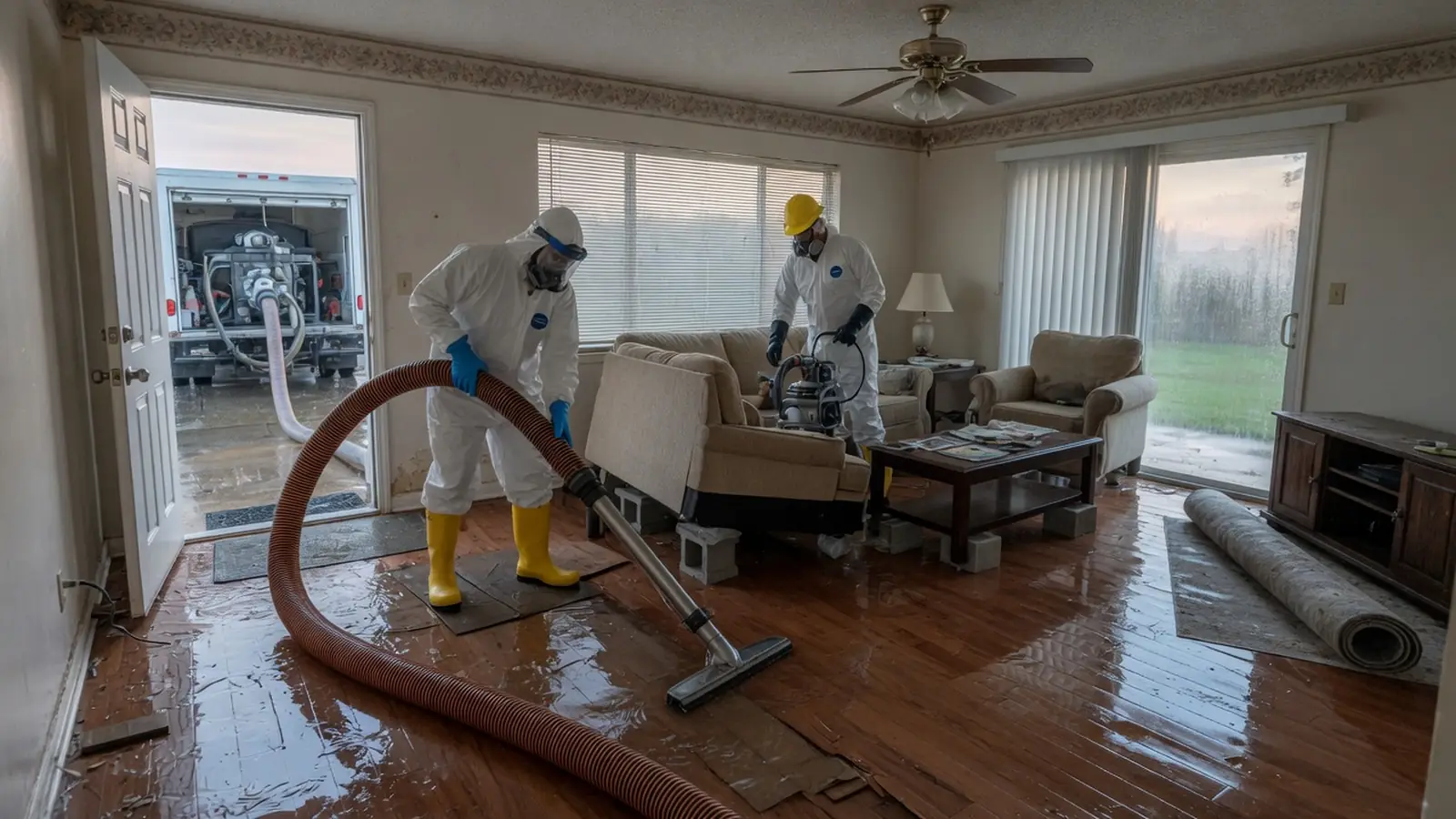
Emergency Water Damage Restoration Stamford CT
When burst plumbing or storm surges breach your property, our rapid extraction technicians deploy high-volume pumps and desiccant drying systems immediately. We stop active water spread, sanitize affected substrates, and dry structural framing to prevent mold development.
Water still running? Call (203) 555-0150.
Prefer to talk? (203) 555-0150
Affordable Rapid Water Damage Mitigation
Our restoration technicians bring decades of hands-on structural drying experience to residential and commercial properties throughout the shoreline region.
About 34% of local housing units (19,585 of 57,319) were built before 1960, the era of galvanized steel supply lines and cast iron drains prone to sudden collapse.
About 14% of housing units (8,241 of 57,319) were built in the 1960s, overlapping the years aluminium branch wiring was installed.
About 25% of housing units (14,213 of 57,319) were built in the 1970s and 1980s, overlapping the years polybutylene supply piping was commonly installed.
About 73% of housing units (42,039 of 57,319) were built before 1980, the period when asbestos-containing materials and lead paint were still in use.
NOAA radar recorded 621 hail signatures within about 15 miles of our municipal center between 2021-2025 (2021: 11, 2022: 100, 2023: 244, 2024: 243, 2025: 23).
The heaviest recent hail year around our coverage area was 2023, with 244 radar hail signatures inside a 15-mile radius causing widespread roof penetrations.
A pattern echoed in public discussions is how a Connecticut homeowner contends with rising groundwater tables pushing water straight up through the concrete slab during prolonged rainstorms, asking how others manage persistent hydrostatic pressure.
When uninsulated basement lines split during coastal cold snaps, property owners can discover how our crews thaw and isolate burst lines before catastrophic flooding ruins finished subfloors.
Every project concludes with certified moisture readings and HEPA air scrubbing to ensure indoor air quality remains pristine.
Reliable Emergency Flood Extraction Process
When water breaches a foundation or pipe, rapid intervention stops cascading damage across framing and trim. Severe freeze-thaw cycles combined with shifting clay soils pull aging underground plumbing lines apart at the seams, creating catastrophic sub-grade leaks that demand immediate mitigation. Property managers facing rising storm runoff rely on our team for comprehensive mitigation for severe basement flooding before structural components degrade.
- Emergency Water Extraction & Containment. Our dispatch crew arrives with truck-mounted vacuum extractors to remove bulk water from floors and carpets immediately. Category 3 black water from storm surge or sewage backup mandates the complete removal and disposal of porous materials like drywall and carpet due to pathogenic saturation.
- Thermal Moisture Mapping & Cavity Inspection. Technicians map hidden moisture pockets across baseboards, subfloors, and structural studs using penetrating pin probes. Moisture can wick up to 3 feet inside sealed wall cavities undetected by sight alone, requiring thermal imaging cameras to prevent internal rot before wall closure.
- Desiccant Dehumidification & Air Movement. We deploy high-velocity centrifugal air movers paired with industrial drying units to pull trapped humidity from structural assemblies. Dense historic materials like plaster, original hardwood, and stone require trailer-mounted desiccant dehumidifiers to extract bound moisture at a molecular level.
- Structural Target Verification & Sanitization. To prevent mold outbreaks and satisfy adjusters, structural drying requires precise targets: drywall below 12%, wood framing below 15%, and concrete below 4% moisture. Technicians apply botanical antimicrobial agents across all dried surfaces once logging confirming these standards is complete.
Certified Structural Drying Standards
Homeowners often describe the stress when a Connecticut buyer evaluates a property with documented moisture intrusion and seeks recommendations for specialized environmental testing to evaluate structural mold remediation requirements. Our certified technicians adhere to strict industry restoration standards, applying calibrated digital psychrometry on every call to track grain depression and relative humidity until structural framing is fully stabilized. When unmitigated dampness persists behind finished walls, property owners should schedule certified structural mold remediation before rebuilding to protect building durability.
Thermal Leak Detection & Mapping
Using infrared cameras and calibrated moisture meters, our technicians identify hidden saturation behind walls, ceilings, and under floorboards without unnecessary demolition. We document exact wet boundaries so drying equipment is focused precisely where moisture hides.
Sub-Grade Slab & Sewer Mitigation
Subterranean line failures and perimeter drainage backups demand fast containment to safeguard structural foundations. We extract contaminated runoff, clean contaminated substrates, and sanitize subterranean areas to restore safe living conditions.
Porous Material Removal & Sanitization
When contaminated water saturates porous carpets, padding, and drywall, safe extraction requires clean removal according to health safety standards. Our crew bags contaminated debris, applies botanical antimicrobials, and cleans framing with HEPA filtration.
Our Commitment To Rapid Structural Restoration
Water damage escalates with every passing hour as building materials absorb moisture and humidity spreads into unaffected rooms. We respond with calibrated extraction and drying equipment, maintaining constant communication while documenting psychrometric readings until structural elements reach safe baseline standards.
- 12Zip Codes Served
- 8Service Areas
- 3Services Offered
Read unfiltered feedback from local property owners who experienced emergency water intrusion and relied on our crew to stabilize their buildings.
“I passed their contact information to my next-door neighbor the morning after our basement pipe burst. The crew had commercial extractors running within an hour and prevented the water from ruining our finished drywall. My neighbor hired them two weeks later for a slab leak and had the exact same seamless experience.”
Marcus T.
“During the initial drying phase, technicians noticed moisture wicking up behind our bathroom vanity where an older supply fitting was slowly weeping. The crew explained the hidden leak immediately, isolated the line, and adjusted their dehumidifiers without creating any chaos or unexpected delays. Their calm professionalism saved our subfloor from rotting out.”
Elena R.
“We had a final buyer walkthrough scheduled in three days when a supply line rupture flooded our downstairs hallway. The team worked around the clock with trailer-mounted desiccant equipment to hit safe moisture thresholds before the closing deadline. The inspector signed off on the dry standards with hours to spare.”
Julian K.
“Another company left noisy fans sitting on wet carpeting for four days without ever checking behind our baseboards. When we called this crew, they identified hidden water three feet up the drywall, removed the moldy insulation, and properly sanitized the framing. They fixed a sloppy, incomplete mess and gave us total peace of mind.”
Brenda M.
Frequently Asked Questions
Why do flood restoration technicians cut out drywall twelve to twenty-four inches above the visible water line rather than just drying it in place?
Technicians cut drywall twelve to twenty-four inches higher because moisture wicks upward inside wall cavities and traps hidden mold growth. Removing saturated gypsum board allows air movers to directly ventilate wet framing studs and wet insulation, preventing structural decay.
How long does structural drying typically take after emergency water extraction?
Most structural drying projects require three to five days of continuous commercial dehumidification to reach safe moisture targets. Drying speed depends on material density, whether water penetrated subfloors, and prevailing outdoor relative humidity levels.
What factors influence the total cost of emergency water damage mitigation?
Mitigation costs depend on the water contamination category, square footage affected, and the amount of saturated material requiring removal. Clean water from supply pipes requires less containment and disposal than Category 3 black water from storm surge or sewer lines.
Will homeowners insurance cover water extraction and structural restoration?
Most policies cover sudden and accidental water discharges like burst pipes, but typically exclude unresolved leaks or external flooding. Our dispatchers assist homeowners by creating moisture logs and itemized photographic inventories required by claims adjusters.
Can carpet and pad be salvaged after a major basement water leak?
Carpets soaked by clean supply lines can often be dried in place, but saturated padding and black water exposures require total disposal. Cushioning foam acts like a sponge, holding trapped contaminants against the subfloor where mechanical airflow cannot reach it.