
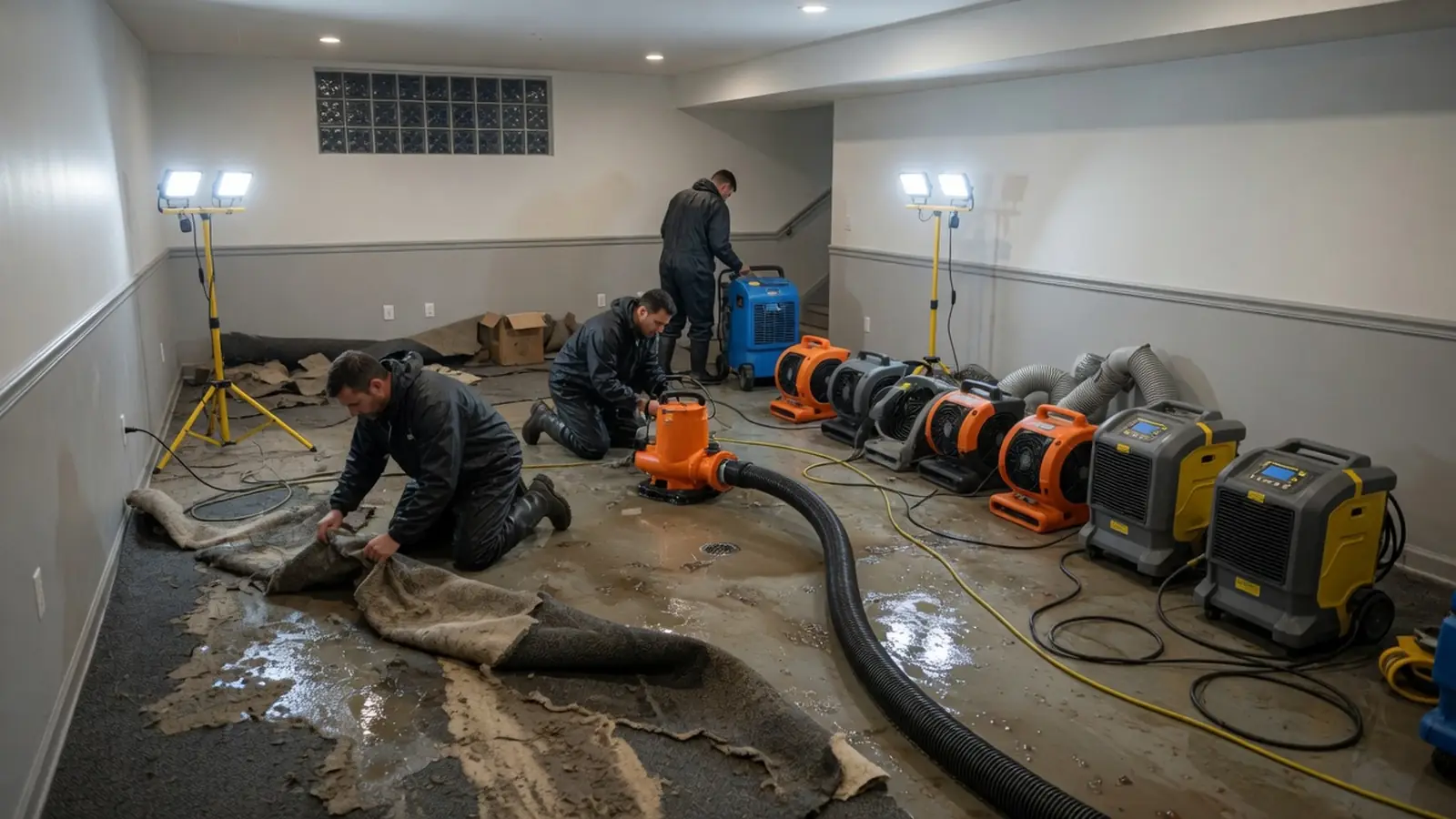
Stamford Basement Flooding
Standing water in your basement ruins framing, drywall, and personal belongings within hours. Our dedicated rapid response crew extracts floodwaters, remediates hidden moisture, and dries your structure thoroughly.
Call (203) 555-0150 if water is flowing now.
Prefer to talk? (203) 555-0150
Dedicated Moisture Control And Flood Recovery
Dealing with a flooded basement requires immediate tactical response to stop moisture from traveling into structural subfloors and framing.
Dense coastal soils and shallow bedrock formations across Fairfield County frequently trap groundwater against foundation walls during extended rainstorms.
Persistent hydrostatic pressure can cause rising groundwater tables to push water straight up through concrete slabs during these prolonged weather events.
Many new homeowners discover latent water intrusion and underlying foundation waterproofing failures after experiencing multiple flood episodes shortly after closing on a property.
Steep uphill surface runoff also complicates sub-grade moisture management by overwhelming exterior grading and outstripping interior sump pump capacity.
Property owners avoid permanent structural rot and toxic indoor air issues by relying on our comprehensive emergency water damage mitigation protocols.
Our technicians deploy commercial-grade submersible pumps and heavy-duty desiccant dehumidifiers to extract water and dry building materials to industry equilibrium.
Every recovery project concludes with rigorous multi-point moisture mapping using thermal imaging cameras and deep pinless meters to verify structural safety.
How We Resolve Basement Flooding
A pattern echoed in public discussions is how homeowners struggle to isolate whether consistent basement pooling stems from perimeter foundation cracks, failing downspouts, or sudden plumbing failures.
- Emergency Extraction And Sump Stabilization. When torrential storm rainfall overwhelms sump pits and leaves water pooling along perimeter walls, rapid industrial extraction prevents deep subfloor saturation.
- Saturated Material Removal. After a plumber repairs a burst pipe, the immediate priority is to extract trapped moisture, tear out waterlogged insulation, and avoid mold proliferation.
- Structural Antimicrobial Containment. Homeowners often describe how a quick surface cleanup following a winter burst pipe leaves extensive hidden mold growth behind baseboards that requires containment before arranging certified structural mold remediation protocols.
- Deep Dehumidification And Verification. When cutting out moisture-damaged drywall reveals mold along wall framing, surface DIY antimicrobial spray is never adequate compared to full certified structural drying and remediation.
Dedicated Moisture Control Without Compromise
A pattern echoed in public discussions is the vital importance of safeguarding residential plumbing against frozen pipe ruptures during severe cold snaps. Property owners struggling with recurrent basement water intrusion during heavy rains need methodical diagnostics to evaluate failing drainage setups and stop moisture from seeping through foundation walls. Our team focuses on transparent communication, thorough moisture testing, and relentless adherence to IICRC restoration standards so that every lower level is returned to safe, habitable condition.
Perimeter Water Extraction
High-volume truck-mounted extraction units swiftly remove pooling floodwater from subfloors, concrete slabs, and perimeter trenches. Rapid extraction halts progressive framing rot and protects mechanical equipment.
Hydrostatic Pressure Mitigation
Targeted structural drying relieves persistent moisture forced through foundation walls and slab seams by rising groundwater tables. We stabilize interior environments to halt chronic seepage.
Thermal Moisture Diagnostic
Advanced infrared imaging inspects cavities behind finished drywall, sill plates, and framing without destructive exploratory demolition. Pinpoint diagnostics confirm complete structural dryness.
Reliable Restoration Built On Exact Standards
Every basement water emergency demands calibrated extraction equipment and strict structural drying protocols. We focus on verifiable moisture meter readings rather than cosmetic cleanup, ensuring your living areas and structural foundations remain dry, stable, and completely safe.
- 19Zip Codes Served
- 8Service Areas
- 3Services Offered
Real feedback from property owners who faced severe basement moisture and flooding emergencies.
“While drying our flooded basement walls, the crew discovered an old unsealed foundation seam that was leaking beneath the sill plate. Instead of ignoring it, they brought in specialized sealing compound and stopped the intrusion immediately without charging surprise fees. Our basement framing has remained completely bone-dry ever since.”
Marcus G.
“We had a real estate closing inspection scheduled forty-eight hours after a torrential storm overwhelmed our basement sump pit. The team brought industrial extractors within hours, worked late into the night, and delivered fully certified dry readings right before the buyer arrived. They saved our transaction from falling apart.”
Elena V.
“A previous waterproofing outfit had left unfastened vapor barriers and missed trapped moisture inside our perimeter baseboards. This crew identified the hidden dampness with thermal cameras, stripped out the saturated materials cleanly, and completely remediated the musty odor. We finally have total peace of mind in our lower level.”
Derek T.
“After water pushed through our concrete slab during heavy rains, we anticipated hidden fees and inflated emergency surcharges. The team walked us through every line item on the initial estimate, stayed exactly on budget, and finished the structural dryout without any additional charges. Their honest approach was a huge relief.”
Chloe S.
Frequently Asked Questions
How quickly should water extraction begin after a basement flood?
Emergency water extraction should begin within 24 to 48 hours to halt progressive structural wood rot and stop hidden mold colonization. Removing standing water immediately prevents deep saturation into sill plates, subflooring, and wall framing.
Why does groundwater seep up through the concrete slab during storms?
Prolonged heavy rainfall elevates the local water table, creating hydrostatic pressure that pushes groundwater upward through slab pores. Without adequate exterior drainage or perimeter sump capacity, water forces its way through the path of least resistance.
Is DIY antimicrobial spray enough when mold appears on wall framing?
Surface sprays fail to reach moisture soaked wood pores, making professional extraction, drying, and certified remediation necessary. When water saturates framing studs, specialized desiccant dehumidification and negative air containment are required.
How do you diagnose recurring basement water intrusion from uphill runoff?
Diagnostic technicians evaluate exterior soil grading, downspout discharge paths, foundation walls, and perimeter sump pump capacity. Identifying how steep slopes channel surface water ensures mechanical mitigation matches exterior hydrological loads.
What should be done after a plumber repairs an indoor burst pipe?
Crews must immediately extract standing moisture, tear out saturated insulation, and run dehumidifiers to stop structural mold growth. Lingering dampness trapped behind baseboards will rapidly compromise interior air quality if left unaddressed.