
Stamford Mold Remediation
When moisture intrusion triggers fungal colonies inside structural cavities, rapid containment is essential to protect structural integrity and respiratory health. Our certified specialists establish negative air pressure, remove non-salvageable materials, and sanitize framing to restore healthy indoor living environments.
Active backup? Call (203) 555-0150 and stop using water in the house.
Prefer to talk? (203) 555-0150
Precision Containment And Remediation
Stamford's humid maritime summers cause warm outdoor air to condense against cold subterranean basement masonry, fueling hidden mold growth behind fiberglass insulation.
Dormant mold spores activate and begin colonizing within 48 hours of water intrusion, shifting standard water extraction into a hazardous bio-remediation project.
A pattern echoed in public discussions is that following a basement flood, homeowners cut out moisture-damaged drywall and discover fungal growth along the framing, wondering whether store-bought antimicrobials are sufficient.
Spraying household bleach on porous wood framing is ineffective at permanently remediating deep root systems of mold colonies because surface chemicals cannot reach embedded hyphae.
When hidden moisture threatens indoor air quality, property owners rely on our comprehensive protocol for emergency water extraction and structural drying to halt structural decay.
Musty odors usually precede visible wall stains, with hidden mold colonies typically active inside cavities for 30 to 90 days before discovery.
Our Step-by-Step Restoration Protocol
Our systematic containment and remediation methodology stops cross-contamination while technicians perform pumping out a flooded basement or drying damp structural assemblies.
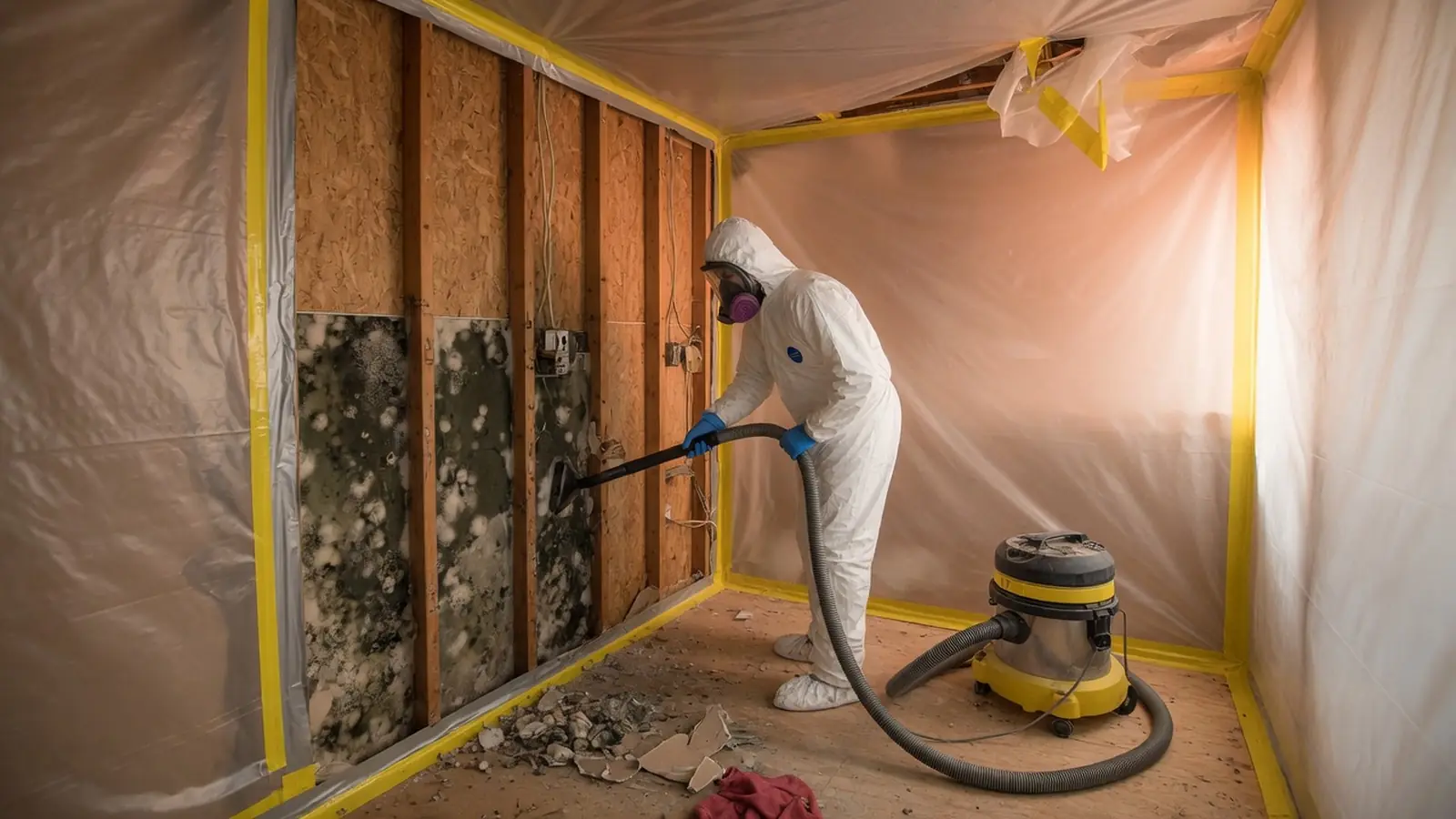
- Polyethylene Containment And Negative Air. Certified mold remediation requires sealing work areas with polyethylene sheeting and running HEPA-filtered air scrubbers under negative pressure to trap airborne spores.
- Removal Of Non-Salvageable Insulation. Per IICRC S520-2024 standards, fiberglass insulation contaminated by cavity moisture cannot be cleaned and must be fully removed and disposed of.
- HEPA Vacuuming And Stud Drying. Contaminated wall framing studs must be HEPA-vacuumed and dried below 16% moisture content before hanging new drywall to prevent recurrent mold growth.
- Air Filtration And Final Clearance. Technicians run continuous air filtration cycles and verify structural equilibrium with digital moisture meters before clearing the space for reconstruction.
Our Remediation Commitment
We back our containment protocols with rigorous quality control, providing honest documentation of moisture logs rather than unverified promises. Homeowners often describe the anxiety of having a plumber repair a pipe leak only to find cavity humidity lingering behind drywall. If your home suffered water intrusion, we ensure all materials are fully decontaminated so you never face secondary microbial blooms after we mitigate moisture from burst frozen pipes.
Air Filtration And Containment
We isolate affected zones using heavy polyethylene barriers and operate negative-air HEPA scrubbers to keep active spores from dispersing into living spaces.
Contaminated Material Removal
Water-damaged drywall and compromised fiberglass insulation are stripped out safely according to national safety standards to eliminate hidden colonies.
Structural Antimicrobial Treatment
Exposed framing studs are HEPA-vacuumed and treated with commercial antimicrobials, ensuring wood dries thoroughly before any reconstruction begins.
Our Standards For Environmental Restoration
We follow strict remediation protocols on every project, maintaining containment integrity until airborne particulates and wood moisture levels return to baseline safety.
- 19Zip Codes Served
- 8Service Areas
- 3Services Offered
Read verified feedback from property owners who experienced our structured containment, clean demolition, and reliable remediation practices.
“I already told my next-door neighbor to call this company after seeing how thorough their containment setup was. The crew isolated our crawlspace and completely scrubbed the framing without letting any dust escape into our living room. It gave me total peace of mind to pass their number along.”
Marcus T.
“Pulling back the wet baseboards revealed black growth spreading several feet higher into the wall cavity than anyone expected. The team calmly adjusted their protocol, brought in additional HEPA scrubbers, and treated the structural studs without adding any surprise fees or panic. Their professionalism turned a stressful discovery into an easy fix.”
Elena R.
“We were three days away from our scheduled buyer inspection when a musty smell led us to a hidden colony behind the pantry. The crew worked late into the evening to strip the ruined insulation and dry the studs so our clearance air test passed on time. They saved our real estate closing from falling apart.”
David K.
“An earlier contractor simply sprayed superficial bleach over our damp basement joists and left behind active roots and water stains. This team came in, stripped away the contaminated materials per industry standards, and HEPA-vacuumed every inch of wood down to clean timber. The difference in their workmanship and our home's air quality was night and day.”
Sarah M.
Frequently Asked Questions
How long does professional mold remediation typically take from start to finish?
Most residential remediation projects require between two and five days depending on the containment size, structural drying, and clearance testing.
Why is spraying household bleach on porous wood framing ineffective?
Bleach cannot penetrate porous wood to kill deep fungal roots, leaving active hyphae behind while water in the solution feeds continued mold growth.
Can moldy fiberglass cavity insulation be cleaned and reinstalled?
Per IICRC S520 standards, contaminated porous fiberglass insulation cannot be salvaged and must be discarded safely to eliminate trapped spores.
What moisture level must framing studs reach before rebuilding?
Structural wood framing studs must be thoroughly dried below 16% moisture content before installing new drywall to prevent recurrent mold outbreaks.
Does homeowners insurance cover professional mold remediation?
Coverage typically applies when fungal growth stems directly from sudden, accidental plumbing line breaks rather than prolonged neglect.