
Stamford Frozen Pipes
Sub-freezing winter cold snaps in coastal Connecticut regularly freeze supply lines run through unheated overhangs, rim joists, and poorly insulated exterior wall cavities. Pipes rarely burst during freezing; rupture occurs during the thaw when melting ice unleashes immense trapped water pressure against brittle pipe walls. Our dedicated crew mobilizes rapidly to thaw supply lines, mitigate hidden moisture, and restore safety.
Questions first? (203) 555-0150.
Prefer to talk? (203) 555-0150
Controlled Thawing And Structural Drying
Sub-freezing winter cold snaps in coastal Connecticut regularly freeze supply lines run through unheated overhangs, rim joists, and poorly insulated exterior wall cavities.
The median owner-occupied home was built in 1971 (Census ACS 5-year), creating structural conditions where uninsulated plumbing runs are common across older neighborhoods.
When unheated spaces drop below freezing, our certified technicians mobilize commercial thermal imaging cameras to track hidden ice blockages without invasive wall cuts.
As homeowners often describe in local discussions when evaluating properties along the river corridor, spotting latent water intrusion before finished surfaces stain requires specialized diagnostic moisture metering.
Our immediate priority centers on isolating the vulnerable line, mitigating pipe stress, and delivering comprehensive emergency water damage restoration across the property.
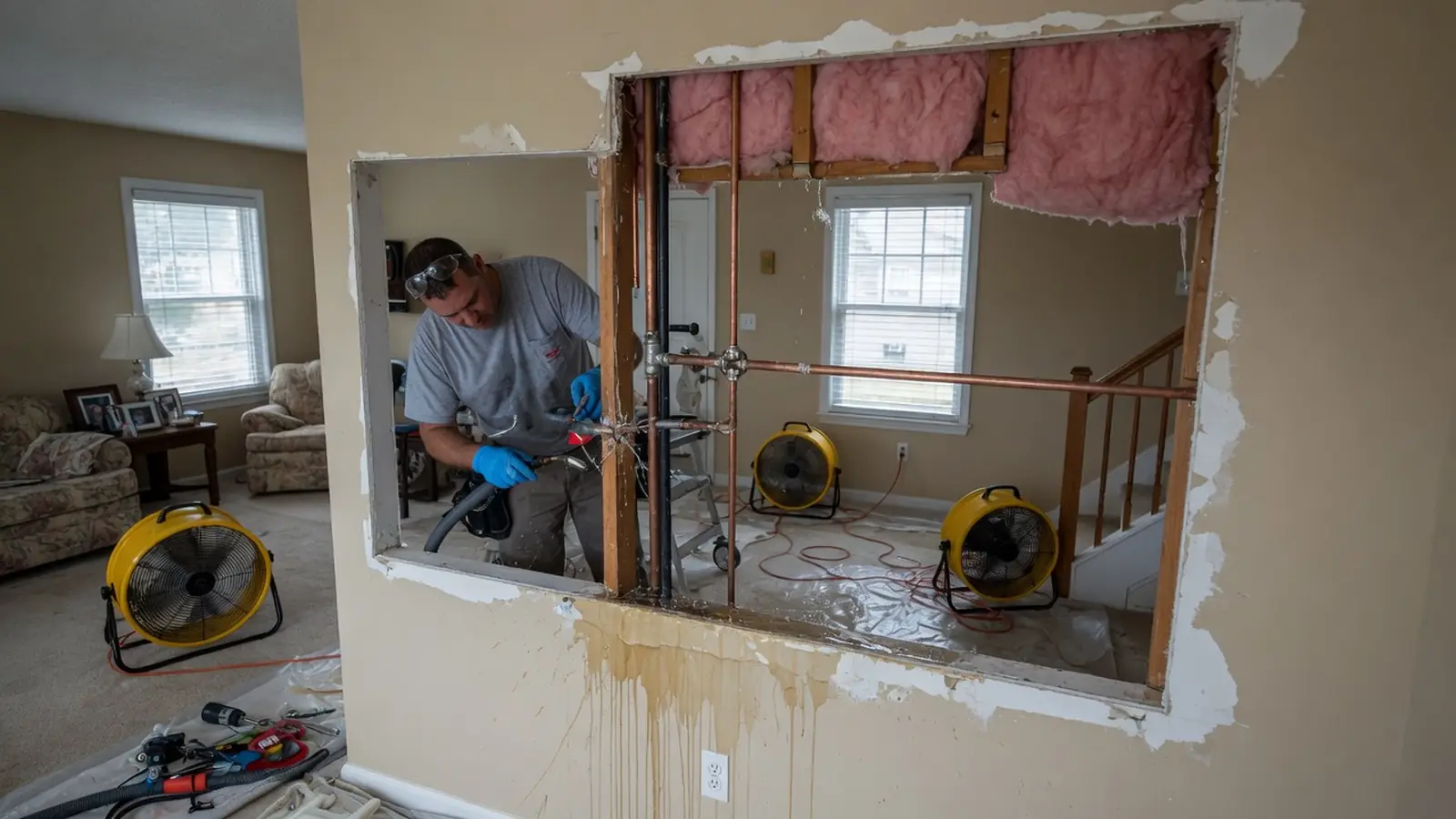
We deploy industrial air movers, low-grain refrigerant dehumidifiers, and HEPA air scrubbers to dry framing cavities thoroughly before microbial growth takes hold.
Every project concludes with digital moisture mapping and thermal verification to certify that wall assemblies have returned to dry standard equilibrium.
How We Safely Thaw And Restore Frozen Lines
A pattern echoed in public discussions is how sudden flooding episodes catch property owners off guard, highlighting why our technicians follow a strict protocol to contain risks and diagnose and resolve persistent basement flooding issues before structural damage spreads.
- Thermal Blockage Detection. Technicians scan exterior wall assemblies and crawl spaces using infrared thermography to pinpoint the exact location of the frozen supply pipe without opening unnecessary drywall.
- Controlled Directional Thawing. Crews thaw frozen supply lines from the open faucet backward toward the blockage to prevent catastrophic hydraulic pressure spikes and secondary pipe bursts.
- Moisture Extraction And Cavity Opening. If a seam has split, we immediately extract standing water with truck-mounted vacuum extractors and set up containment barriers to isolate wet insulation.
- Structural Dehumidification And Monitoring. High-velocity air movers and commercial dehumidifiers run continuously while our technicians log daily moisture pin readings until building materials reach dry standards.
Our Commitment To Property Protection
Every water loss response adheres strictly to IICRC S500 structural drying standards, utilizing calibrated non-invasive moisture meters and thermal imaging to verify that building cavities are thoroughly dry. Should latent moisture persist in hidden sill plates, we coordinate targeted structural mold remediation requirements to protect indoor air quality and structural stability.
Emergency Frozen Pipe Thawing
Using controlled thermal techniques, our technicians thaw inaccessible water lines safely from open fixtures backward. We eliminate internal ice dams without using open flames or risking secondary hydraulic bursts.
Burst Pipe Structural Extraction
When freezing temperatures cause plumbing lines to rupture upon thawing, we deploy commercial water extraction units immediately. Our rapid response removes standing water from flooring, subfloors, and basement spaces.
Cavity Drying & Moisture Inspection
We monitor damp drywall, insulation, and rim joists with precision thermal cameras and moisture meters. Sustained commercial dehumidification ensures hidden structural components dry completely without mold propagation.
Our Commitment To Controlled Pipe Thawing And Water Extraction
When winter freezes compromise residential plumbing, our certified technicians approach every job with precision thermal diagnostics and structural moisture metering. Customers can count on disciplined containment, non-invasive directional thawing, and thorough industrial dehumidification until every affected cavity returns to documented dry standards.
- 17Zip Codes Served
- 10Service Areas
- 3Services Offered
Read first-hand feedback from local property owners who experienced emergency frozen pipe blockages and burst supply lines during severe winter cold snaps.
“Our senior golden retriever was terrified of the rushing water when a second-floor radiator supply pipe burst during the freeze. The crew arrived promptly, placed non-slip runners to keep our dog safe, and contained the moisture before it migrated into the subfloor. Their gentle approach made a frightening morning manageable.”
David M.
“A blinding ice storm iced over our steep hillside driveway, preventing heavy service vans from getting to our front entrance. The technicians manually carried their thermal cameras and extraction equipment up the hill on foot without missing a beat. They located the frozen rim joist line and thawed it safely before structural damage set in.”
Elena R.
“Living in an attached condominium community, I worried that industrial drying equipment would trigger complaints from our HOA board and next-door neighbors. The crew coordinated directly with building management, routed all discharge lines discreetly, and kept sound levels strictly within community guidelines. Everything was completely dried without causing friction with anyone next door.”
Marcus P.
“Three months have passed since that brutal polar vortex, and our finished drywall and baseboards remain perfectly straight with zero lingering moisture odors. The team verified every wall cavity with deep probe meters after thawing the blocked line, so we never had to worry about hidden rot developing down the road. It has been completely worry-free through every cold spell since.”
Gretchen K.
Frequently Asked Questions
How can a homeowner verify whether a thawed pipe burst behind finished drywall before water visibly stains the ceiling or wall surface?
Homeowners can check their water meter for unexplained spinning and listen for hissing sounds while testing wall surfaces with a moisture meter. If all fixtures are closed and the meter dial rotates, water is actively escaping behind the walls.
Why do frozen pipes usually burst during the thawing process rather than during freezing?
Pipes burst during thawing because melting ice releases immense trapped hydraulic pressure against pipe walls weakened by sub-freezing exposure. The expanding liquid has nowhere to go until a brittle seam ruptures.
What is the safest professional procedure for thawing a frozen indoor water line?
Technicians open the affected faucet and apply controlled heat backward toward the blockage to prevent dangerous hydraulic pressure spikes. This allows melting water and steam to vent freely through the open fixture.
How long does professional structural drying take after an indoor pipe bursts?
Complete structural drying typically requires three to five days of continuous operation using industrial dehumidifiers and air movers. Technicians track progress with daily moisture readings until framing materials reach dry standard baselines.
Will homeowners insurance cover water damage caused by frozen and burst pipes?
Most standard policies cover sudden burst pipe damage provided the property owner maintained reasonable heat inside the dwelling. Detailed mitigation documentation and rapid response logs support successful claims processing.